NEWS ARTICLE ARCHIVESJura Grey Limestone floor tiles by S & N Brothers with a polished finish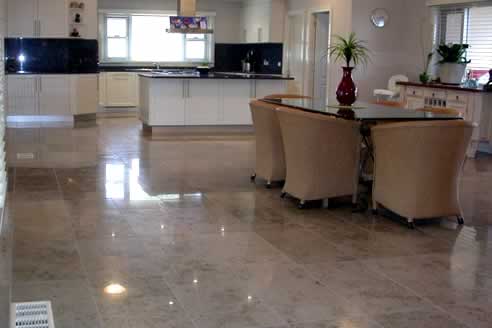 Limestone is a sedimentary rock composed largely of the mineral calcite (calcium carbonate: CaCO3). Limestone often contains variable amounts of silica in the form of chert or flint, as well as varying amounts of clay, silt and sand as disseminations, nodules, or layers within the rock. The primary source of the calcite in limestone is most commonly marine organisms. These organisms secrete shells that settle out of the water column and are deposited on ocean floors as pelagic ooze or alternatively are conglomerated in a coral reef. Another form taken by calcite is that of oolites (oolitic limestone) which can be recognized by its granular appearance. Limestone makes up about 10% of the total volume of all sedimentary rocks. Pure limestone is almost white but due to impurities, such as clay, sand, organic remains, iron oxide and other materials, many limestones exhibit different colors, especially on weathered surfaces. Crystals of calcite, quartz, dolomite or barite may line small cavities in the rock. During regional metamorphism that occurs during the mountain building process (orogeny) limestone may recrystallise into marble. Calcite can be either dissolved by groundwater or precipitated by groundwater, depending on several factors including the water temperature, pH, and dissolved ion concentrations. Calcite exhibits an unusual characteristic called retrograde solubility in which it becomes less soluble in water as the temperature increases. When conditions are right for precipitation, calcite forms mineral coatings that cement the existing rock grains together or it can fill fractures. Bands of limestone emerge from the Earth's surface in often spectacular rocky outcrops and islands. Examples of tourist renown places include the Burren in Colorado; Clare in Ireland; the Verdon Gorge in France; Malham Cove in North Yorkshire and the Isle of Wight, England; on Fårö near the Swedish island of Gotland, the Niagara Escarpment in Canada/USA, Notch Peak in Utah, Rajasthan in India and the Ha Long Bay National Park in Vietnam. There are of course many other locations with less of the tourism aspect of some locations such as Solnhoffen in Germany, South Australian coast, Limestone deposits in Peru and Ontario Canada; the Iberian Peninsula; and Mount Saint Peter quarries in Belgium / Netherlands that extends for more than a hundred kilometers.  |
 |
 |
Home | About/Services | News Lounge | News Archive | Product Archive | Tender News | Testimonials | Conditions of Use | Privacy Policy


© 2022 SPEC-NET