

Role of Modular Systems in Modern Stormwater Infrastructure Today, the context has changed. Urban environments are denser. Site constraints are tighter. Regulatory expectations are broader. And stormwater systems are expected to perform multiple functions simultaneously. In this new landscape, modular systems are emerging as a key enabler of modern stormwater design. From Fixed Infrastructure to Flexible SystemsConventional stormwater solutions are typically fixed in form and function.They are:
While effective in straightforward applications, these systems can become limiting in complex urban developments where:
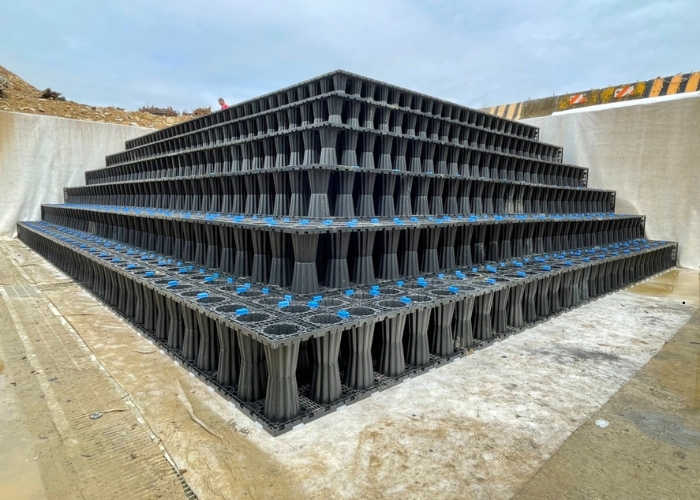
They consist of repeatable components that can be configured to suit a wide range of site conditions, allowing designers to move beyond "standard solutions" and develop systems tailored to specific project needs. What Defines a Modular Approach?At its core, a modular system is built from interconnected units that work together as a single structure.This approach enables: Scalability. Systems can be expanded or reduced depending on required capacity, without redesigning the entire solution. AdaptabilityModules can be arranged to fit irregular geometries, avoiding conflicts with services, foundations, or other constraints.Multi-FunctionalityThe same system can be designed to deliver multiple outcomes, such as:
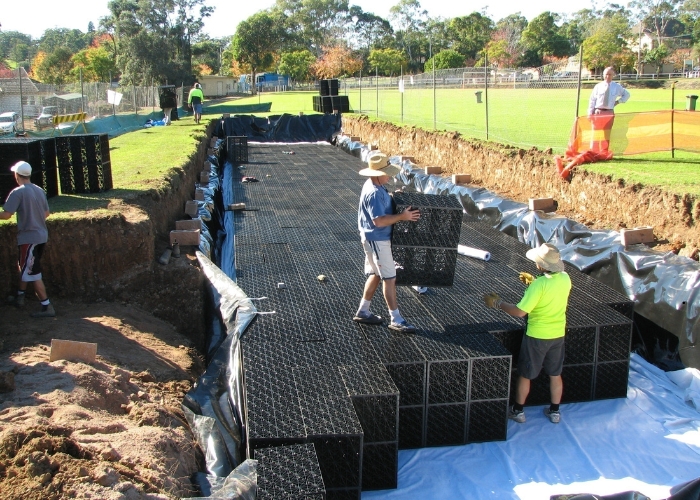
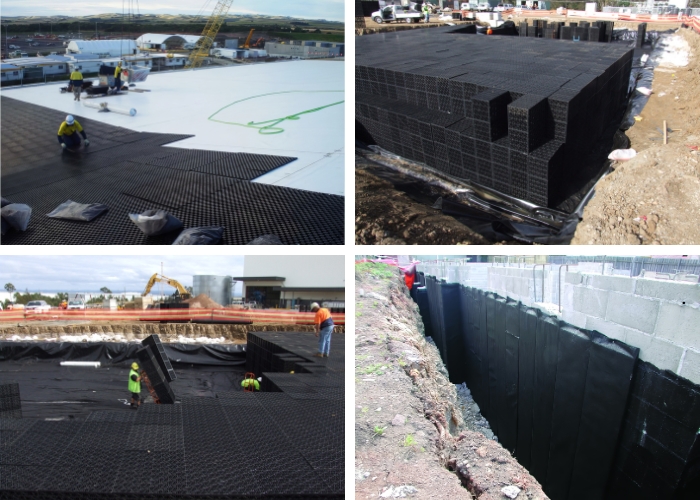
Ease of InstallationLightweight, repeatable components can simplify construction, particularly in sites where access is limited.Addressing the Reality of Urban ConstraintsOne of the defining challenges of modern development is the lack of available space.Stormwater systems are often required to fit within areas that are:
Modular systems provide a way to:
Supporting Integrated Water ManagementAs discussed in previous articles, effective stormwater design increasingly relies on integrated strategies-combining detention, infiltration, and reuse.Modular systems are well suited to this approach because they can be configured to support different functions within a single footprint. For example:
Performance and ReliabilityFlexibility does not come at the expense of performance.Modern modular systems are engineered to meet stringent requirements, including:
A Shift Toward System ThinkingThe adoption of modular solutions reflects a broader shift in the industry-from designing individual components to designing complete systems.Instead of asking: "What tank do we need?" Designers are now asking: "How can this site manage water effectively across multiple objectives?" This shift encourages:
Enabling Future AdaptationAnother advantage of modular approaches is their potential to support future adaptability.As climate conditions change and regulatory requirements evolve, stormwater systems may need to be upgraded or modified. Fixed, monolithic infrastructure can be difficult to alter once installed. Modular systems, however, offer the possibility of:
Beyond Products: Enabling Better OutcomesIt is important to recognise that modular systems are not just a different type of product-they represent a different way of approaching stormwater design.They enable:
Looking AheadAs urban environments become more complex, the demand for adaptable, high-performance stormwater solutions will continue to grow.Modular systems are well positioned to meet this demand, providing designers with the tools needed to deliver integrated, resilient water management strategies in even the most constrained conditions. The next challenge lies in ensuring that these systems are not just effective-but also capable of responding to the increasing uncertainty of climate patterns. Please head over to atlantiscorporation.com.au for more information.
|
02 9417 8344 3/19-21 Gibbes Street, Chatswood, NSW, 2067
|
Related News Articles
 Space Is the New Constraint: Rethinking
 The Economics of Smarter Stormwater
 Green vs Grey Infrastructure: Why the
 Designing for Extreme Weather: Why
 Infiltration: The Missing Piece in Urban
 Why Detention Alone Is Not the Solution
 From Drainage to Water Management: A
 The Hidden Crisis Beneath Our Cities:
 Green Wall System for Vertical Gardens
 Green Facade Architectural Screen System
 Drainage System for Sports Fields by
 Structural Soil for Urban Tree Growth by
 Vertical Gardens for Building Facades by
 Stable Grid for Equestrian Surface
 Vertical Wall Drainage Solution for
 Heavy Duty Underground Tank System by
 Subsurface Drainage for Tunnels and
 Stable Ground Reinforcement for
 Mini Water Storage Tank for Versatile
 Efficient Groundwater Filtering Strip
 |
 |
Home | About/Services | News Lounge | News Archive | Product Archive | Tender News | Testimonials | Conditions of Use | Privacy Policy | Stats


© SPEC-NET