

Designing for Extreme Weather: Why Average Conditions Are No Longer Enough For decades, stormwater systems have been designed around a simple premise: historical data predicts future performance. Rainfall intensity, frequency, and duration were analysed using long-term records, and infrastructure was sized accordingly. The result was a set of design standards based on "average" or statistically expected conditions. But that premise is no longer holding.Across many regions, storm events are becoming more intense, less predictable, and more concentrated over shorter periods of time. What was once considered a rare occurrence is now happening with increasing frequency. This shift raises an important question: What happens when we design for conditions that no longer exist? The Problem with "Design Storms"Traditional stormwater design relies heavily on defined storm events- such as the 1-in-10 year or 1-in-100 year storm.These benchmarks are useful, but they are inherently backward-looking. They assume that future rainfall patterns will follow historical trends. Increasingly, that assumption is being challenged. Design storms may no longer fully capture:
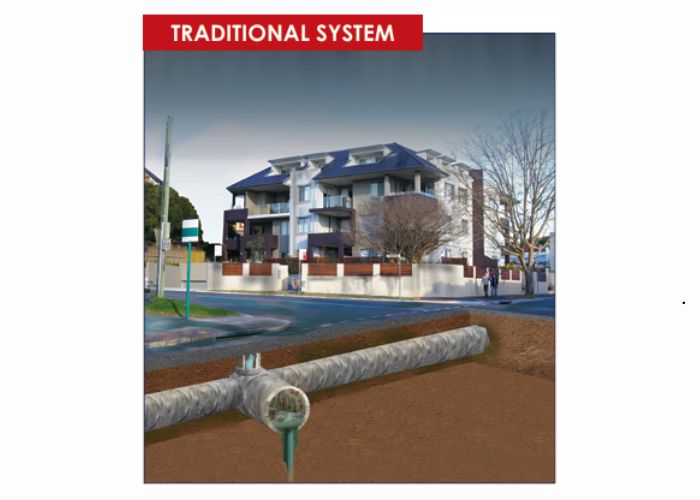
When Systems Reach Their LimitsAll stormwater systems have a design capacity.Under extreme conditions, even well-designed infrastructure can be exceeded. The question is not whether this will happen- but how systems behave when it does. In traditional approaches, exceeding capacity often leads to:
This highlights a critical limitation of conventional design thinking: it often focuses on optimal performance within defined limits, rather than resilience beyond them. Resilience vs EfficiencyHistorically, stormwater systems have been optimised for efficiency.They are designed to:
A highly optimised system may perform well within its design range, but have limited capacity to adapt when conditions exceed expectations. Resilient systems, by contrast, are designed with:
Designing for UncertaintyOne of the biggest challenges facing engineers today is not just increased intensity- but increased uncertainty.It is no longer enough to design for a single defined scenario. Instead, systems must be capable of responding to a range of possible conditions, including those that fall outside historical norms. This requires a shift in design philosophy:
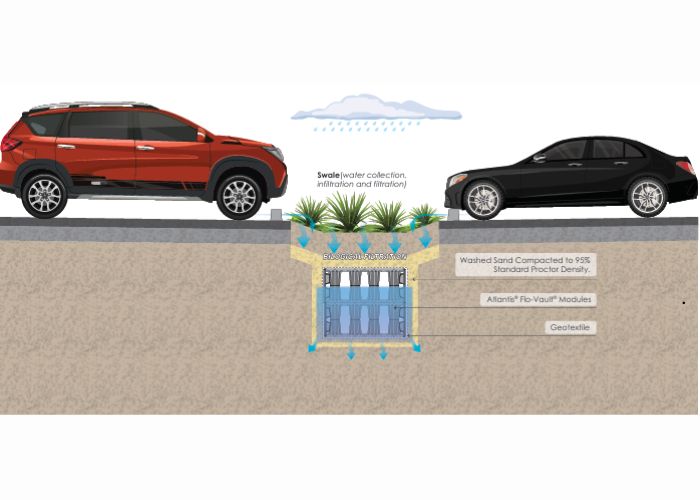
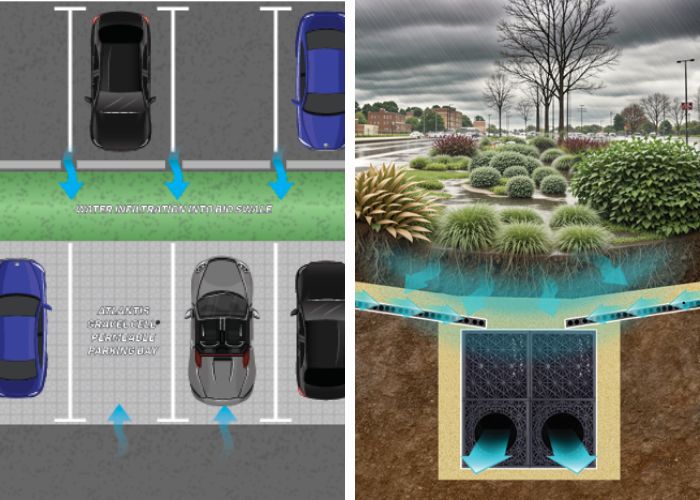
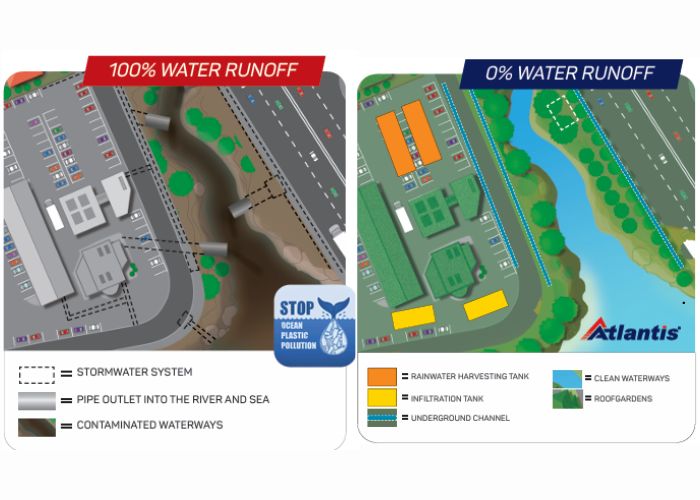
The Role of Distributed SystemsCentralised infrastructure, while effective in certain contexts, can become a point of vulnerability under extreme conditions.If a single system is exceeded, the consequences are concentrated and often severe. Distributed approaches- where stormwater is managed across multiple points within a site- offer greater resilience. Benefits include:
Layering Functions for Better OutcomesAs explored in earlier articles, modern stormwater design increasingly relies on combining multiple strategies.In the context of extreme weather, this layered approach becomes even more important. For example:
Flexibility as a Design AdvantageIn uncertain conditions, flexibility becomes one of the most valuable attributes of any system.Infrastructure that can:
Planning for ExceedanceAn often-overlooked aspect of resilient design is acknowledging that exceedance will occur.Rather than treating it as a failure, modern design approaches aim to manage exceedance safely and predictably. This includes:
A Changing BaselineWhat was once considered "extreme" is gradually becoming part of the new normal.As a result, design expectations are evolving. Regulators, councils, and developers are increasingly aware that:
Looking AheadDesigning for average conditions may have been acceptable in the past- but it is no longer enough.The future of stormwater management lies in systems that can:
The next step in this conversation is understanding how different types of infrastructure- both natural and engineered- can work together to deliver these outcomes.
|
02 9417 8344 3/19-21 Gibbes Street, Chatswood, NSW, 2067
|
Related News Articles
 Space Is the New Constraint: Rethinking
 The Economics of Smarter Stormwater
 Green vs Grey Infrastructure: Why the
 Role of Modular Systems in Modern
 Infiltration: The Missing Piece in Urban
 Why Detention Alone Is Not the Solution
 From Drainage to Water Management: A
 The Hidden Crisis Beneath Our Cities:
 Green Wall System for Vertical Gardens
 Green Facade Architectural Screen System
 Drainage System for Sports Fields by
 Structural Soil for Urban Tree Growth by
 Vertical Gardens for Building Facades by
 Stable Grid for Equestrian Surface
 Vertical Wall Drainage Solution for
 Heavy Duty Underground Tank System by
 Subsurface Drainage for Tunnels and
 Stable Ground Reinforcement for
 Mini Water Storage Tank for Versatile
 Efficient Groundwater Filtering Strip
 |
 |
Home | About/Services | News Lounge | News Archive | Product Archive | Tender News | Testimonials | Conditions of Use | Privacy Policy | Stats


© SPEC-NET