

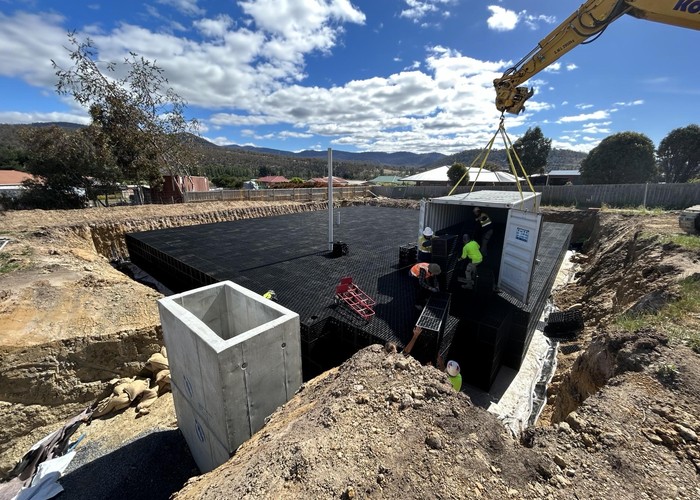
Water Reuse: Turning Stormwater into a Valuable Resource For decades, stormwater has been treated as something to remove. Captured, conveyed, and discharged—often as quickly as possible. But as cities face increasing pressure on water resources, this approach is being re-evaluated. A new question is emerging: What if stormwater wasn't a waste product—but a resource? The Growing Pressure on Water SupplyUrban areas are experiencing a dual challenge: -More intense rainfall events generating excess stormwater-Periods of water scarcity placing pressure on potable water supplies This imbalance highlights a missed opportunity. While valuable potable water is used for irrigation, cleaning, and non-potable applications, large volumes of stormwater are discharged and lost from the system. Reusing stormwater offers a way to bridge this gap—reducing demand on traditional water sources while improving overall system efficiency. What Is Stormwater Reuse?Stormwater reuse involves capturing runoff, storing it, and using it for non-potable applications such as: -Landscape irrigation-Toilet flushing -Cooling systems -Industrial processes Instead of leaving the site, water becomes part of a closed-loop system, contributing ongoing value. Why Reuse Matters1. Reducing Demand on Potable Water 2. Lowering Operational Costs 3. Supporting Sustainability Targets 4. Reducing Stormwater Discharge From Compliance to OpportunityTraditionally, stormwater systems have been designed to meet compliance requirements—primarily focused on managing peak flow. Reuse introduces a new dimension. Instead of designing systems purely to meet minimum standards, developments can begin to: -Extract value from stormwater-Improve resource efficiency -Enhance long-term operational performance This transforms stormwater infrastructure from a cost centre into a functional asset. Integrating Reuse into System DesignEffective stormwater reuse does not happen in isolation—it must be integrated into the broader water management strategy. Key components include: -Capture: Collecting runoff from roofs, pavements, and other surfaces.-Storage: Providing sufficient capacity to retain water between rainfall events. -Treatment: Ensuring water quality is suitable for its intended use. -Distribution: Delivering water to end-use applications within the site. The success of a reuse system depends on how well these elements are coordinated within the overall design. Balancing Supply and DemandOne of the key challenges in stormwater reuse is matching water availability with usage demand. Rainfall is variable, while water demand may be relatively consistent. This requires careful consideration of: -Storage capacity-Expected rainfall patterns -Intended applications -Backup supply options In many cases, reuse systems are designed to supplement, rather than replace, potable water supply. The Role of Space-Efficient StorageAs discussed in the previous article, space is a critical constraint in modern developments. Reuse systems require storage—but traditional tanks can occupy valuable space. This is where integrated, below-ground solutions become particularly effective. By combining: -Storage-Detention -Potential infiltration within a single system, developments can maximise functionality without sacrificing usable area. This approach allows stormwater reuse to be implemented even in highly constrained urban sites. Enhancing System PerformanceReuse does more than provide an alternative water source—it also improves overall stormwater system performance. By actively drawing down stored water between storm events, reuse systems: -Increase available storage capacity-Reduce the likelihood of system overflow -Improve resilience during consecutive rainfall events This creates a more dynamic and responsive system compared to static storage alone. A Step Toward Circular Water SystemsStormwater reuse is part of a broader shift toward circular water management. Instead of linear systems—where water is used once and discharged—circular systems aim to: -Retain water within the site-Use it multiple times -Minimise waste This approach aligns with global sustainability goals and reflects a more efficient use of resources within the built environment. Implementation ConsiderationsWhile the benefits are clear, successful implementation requires careful planning. Key considerations include: -Water quality requirements-System maintenance -Regulatory compliance -User acceptance and operational management When these factors are addressed early in the design process, reuse systems can be both practical and highly effective. Looking AheadAs water scarcity and urban pressures continue to grow, the value of stormwater reuse will only increase. Developments that incorporate reuse strategies are better positioned to: -Reduce operational costs-Improve sustainability performance -Enhance resilience to changing conditions More importantly, they represent a shift in mindset—from managing water as a problem to leveraging it as an asset. The next step is understanding how all these elements—detention, infiltration, reuse, and space efficiency—come together through coordinated design processes. Planning stormwater reuse for a constrained site? Talk to Atlantis Corporation about combining below-ground storage, detention and reuse in a single system at atlantiscorporation.com.au.
|
02 9417 8344 3/19-21 Gibbes Street, Chatswood, NSW, 2067
|
Related News Articles
 Space Is the New Constraint: Rethinking
 The Economics of Smarter Stormwater
 Green vs Grey Infrastructure: Why the
 Designing for Extreme Weather: Why
 Role of Modular Systems in Modern
 Infiltration: The Missing Piece in Urban
 Why Detention Alone Is Not the Solution
 From Drainage to Water Management: A
 The Hidden Crisis Beneath Our Cities:
 Green Wall System for Vertical Gardens
 Green Facade Architectural Screen System
 Drainage System for Sports Fields by
 Structural Soil for Urban Tree Growth by
 Vertical Gardens for Building Facades by
 Stable Grid for Equestrian Surface
 Vertical Wall Drainage Solution for
 Heavy Duty Underground Tank System by
 Subsurface Drainage for Tunnels and
 Stable Ground Reinforcement for
 Mini Water Storage Tank for Versatile
 |
 |
Home | About/Services | News Lounge | News Archive | Product Archive | Tender News | Testimonials | Conditions of Use | Privacy Policy | Stats


© SPEC-NET